

 Evgenii Iudin
 Updated March 2026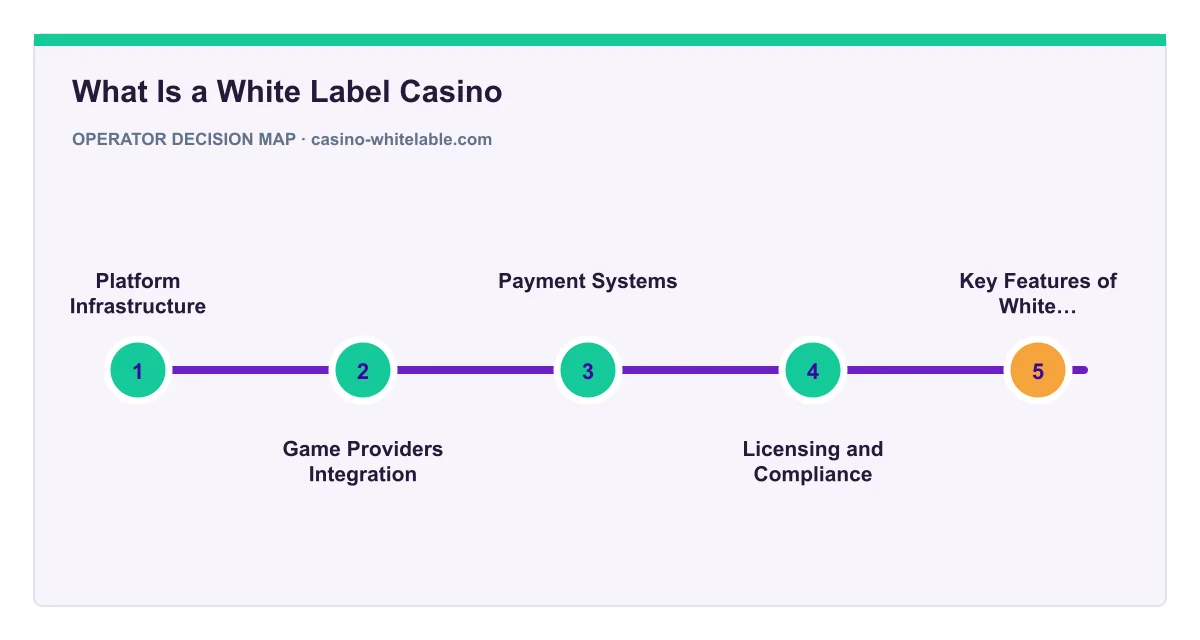
Definition: A white label casino is an online casino brand launched on a pre-built gambling platform where the platform provider supplies the core technology and regulated infrastructure, while the brand operator focuses on marketing, positioning, and customer acquisition.
Last updated: March 8, 2026
Written by: iGaming Research Team
Reviewed by: Compliance Editor (Responsible Gambling & Payments)
Important notice: This guide is informational and not legal advice. Online gambling rules, licensing requirements, and payment compliance vary by jurisdiction. Always verify local requirements with qualified counsel and your platform/payment partners before launch.
White label casinos have become one of the most widely used business models in the iGaming industry. Instead of building an online casino platform from scratch, entrepreneurs can launch a brand on an already developed infrastructure provided by a specialized platform provider.
This approach reduces development costs, technical complexity, and time to market. In most setups, the brand operator handles marketing, branding, and customer acquisition, while the platform provider runs the technology stack that powers accounts, games, payments, and security.
Because online gambling is a regulated environment, operators must clearly understand licensing responsibilities, compliance obligations, and operational processes behind the platform infrastructure.
Platform Infrastructure
- Core platform: Account creation, authentication, and player profile management.
- Operational console: Admin tools for player support and reporting.
- Security: Hosting, uptime monitoring, and incident response.
The foundation of every white label casino is its platform infrastructure. This includes the core software that powers the website, manages user accounts, processes transactions, and keeps the casino running reliably.
Platform providers typically supply a backend system that includes game servers, player management tools, reporting dashboards, fraud monitoring, and support interfaces. These components work together in a centralized administrative panel.
Infrastructure is often hosted in secure cloud environments to maintain stability and scalability. Because the system already exists, operators can launch faster compared to developing custom software.
Operators who want to understand the technology stack behind such solutions often explore the ecosystem of casino software platforms.
Game Providers Integration
- Aggregation layer: One integration connects multiple studios.
- Content management: Updates and new games handled by the platform.
- Catalog control: Operators select providers and titles.
Game providers supply the content that players interact with. Online casinos rely on a large catalog of slots, table games, live dealer experiences, and instant games.
Instead of negotiating with every game studio individually, white label platforms typically use aggregation systems. This allows operators to access multiple providers through a single integration.
This system simplifies operations and ensures a consistent game catalog for players. Many operators review the available list of casino game providers when evaluating platform capabilities.
Payment Systems
- Deposits via cards, bank transfers, and e-wallets
- Wallet systems tracking balances and bets
- Withdrawals processed through payment gateways
Payment infrastructure is essential for online casinos. White label platforms normally include integrated payment solutions that support deposits and withdrawals.
These systems connect the casino platform with payment service providers that process transactions securely.
Payment solutions must comply with financial regulations, fraud monitoring policies, and anti-money-laundering controls.
Technical payment connections are usually implemented through casino API integration.
Licensing and Compliance
- Licensing structures vary by jurisdiction
- The licensed entity is responsible for compliance
- Operators must follow responsible gambling policies
Operating an online casino requires regulatory compliance. Depending on the platform model, the license may be held by the platform provider or by the brand operator.
Jurisdictions such as Malta and Curaçao have licensing frameworks that allow platform-based operations, but each market has its own rules.
Compliance procedures may include identity verification (KYC), anti-money-laundering checks, and responsible gambling controls.
For a full overview of the model, see our guide to white label casino platforms.
Key Features of White Label Casino Platforms
- Player account management
- Game aggregation systems
- Payment integrations
- Fraud monitoring tools
- Customer support systems
- Analytics and reporting dashboards
Modern white label platforms include multiple operational tools that help operators manage their business efficiently.
These platforms also support mobile compatibility so players can access games across desktop and mobile devices.
Advantages of the White Label Model
- Faster market entry
- Lower upfront costs
- Reduced technical complexity
The white label casino model allows operators to launch faster because the infrastructure already exists.
Instead of investing heavily in software development and technical operations, operators can focus on marketing, brand development, and player acquisition.
Many businesses also compare this approach with a turnkey casino solution before choosing a platform strategy.
Potential Limitations
- Limited control over platform technology
- Revenue sharing models
- Reduced customization options
Despite its advantages, the white label model has limitations.
Operators may have limited flexibility to modify the platform or develop unique features because the core technology belongs to the platform provider.
Revenue sharing agreements may also affect long-term profitability.
Who Should Choose a White Label Casino
- Startups entering the iGaming market
- Marketing agencies and affiliate networks
- Companies expanding into online gambling
White label casino platforms are well suited for businesses that want to enter the online gambling market quickly without building their own technology stack.
For many companies, this model is the first step toward building a larger iGaming operation.
Final Thoughts
White label casinos provide one of the fastest ways to launch an online casino brand.
By using an established platform provider, operators gain access to infrastructure, games, payment systems, and compliance tools without the need for extensive development.
However, operators should carefully review licensing responsibilities, payment agreements, and commercial terms before launching.
When implemented correctly, a white label casino platform can provide a strong foundation for building a successful online gambling business.
